


The fleet manager’s job is evolving into that of a “mobility manager”, and with it new missions. To support them in their day-to-day work and enable them to concentrate on value-added tasks, they can equip themselves with fleet management software.
The concept of fleet management has been around for many, many years, starting with transport companies. A job in its own right, or integrated with other functions, it is essential whenever a company owns company vehicles, machinery, heavy goods vehicles or even bicycles! The term “fleet manager” is used to describe the person in charge of managing vehicles throughout their lifecycle in the company’s fleet.
What does fleet management actually involve, and what is fleet management software? That’s what we’d like you to find out in this article.
What is automotive fleet management ?
The term “fleet” is used when a company, whether private or public, makes vehicles available to its employees to enable them to carry out their professional activities. These may be company or service cars, utility vehicles, machinery, heavy goods vehicles, two-wheelers (motorcycles, scooters, bicycles, etc.), etc.
The concept of fleet management encompasses a multitude of different tasks, and concerns both private and public companies. More specifically, it covers all tasks relating to the use, monitoring and maintenance of the vehicles used by a company’s employees.
The mission of the person in charge of the corporate fleet is to ensure efficient use of vehicles, reduce operating costs, improve driver and passenger safety, and minimize environmental impact. It usually involves putting in place policies, procedures and systems to monitor and control fleet activities. In this case, equipping the fleet manager with fleet management software can be very useful!
In short, fleet management means managing and supervising vehicles throughout their life cycle in the company fleet: defining the Car Policy, ordering vehicles and equipment, administrative procedures for registration and insurance, monitoring costs and vehicle use, and so on.
Vehicle fleet management is a strategic mission for any company. Having a fleet of vehicles represents a relatively high cost. It is therefore essential to ensure efficient and precise monitoring, and to maintain a global vision of the fleet.
What are the challenges of fleet management?
Vehicle fleet management involves the supervision and coordination of a company or organization’s vehicles. This is a crucial area for companies with a fleet of vehicles, whether cars, commercial vehicles, trucks or other types of vehicles used in their business. Here are just some of the important issues involved in fleet management:
Operational costs: Effective fleet management aims to minimize operational costs. This includes reducing fuel or electricity consumption, regular and, in some cases, early vehicle maintenance, managing repairs and claims, as well as managing driver and insurance costs.
Safety: Driver safety is a key issue. Companies need to put in place policies and procedures to keenly sensitize employees to road safety: verifying the possession and validity of driving licenses, training in responsible driving (eco-driving), limiting driving time, providing a regularly maintained vehicle, etc.
Optimizing productivity: Good fleet management optimizes driver and vehicle productivity. This can be achieved through better route planning, the use of fleet management software to track driver driving behavior or vehicle utilization, for example.
Environmental compliance: With growing concerns and recent regulations related to the environment, fleet management needs to adapt and take environmental aspects into account. This can include integrating low-emission vehicles (electric vehicles or plug-in hybrids) into its fleet, reducing fuel consumption, regularly monitoring and controlling CO2 emissions, and complying with current environmental regulations (LOM, WLTP standard, etc.).
Data monitoring and management: Fleet management involves the collection and analysis of data from fleet vehicles, drivers and operational performance. The data collected can help inform decisions to improve fleet efficiency, profitability and regulatory compliance.
Regulatory compliance: Car fleets have to comply with various regulations, such as road safety rules, CO2 emission standards, regulated driving hours for drivers, etc. Fleet management involves ensuring that all vehicles and drivers comply with these regulations.
Maintenance and repair: Regular vehicle maintenance is essential to keep vehicles running smoothly, extend their service life and ensure driver safety. Vehicle fleet management includes planning and monitoring maintenance, managing repairs and reducing vehicle downtime.
The challenges of fleet management are manifold. In order to achieve their objectives, fleet managers must be able to benefit from a global and detailed vision of the vehicles that make up the fleet for which they are responsible. Tracking and analyzing vehicle usage and financial data are essential steps in this process. What if the solution was fleet management software?
What is fleet management software?
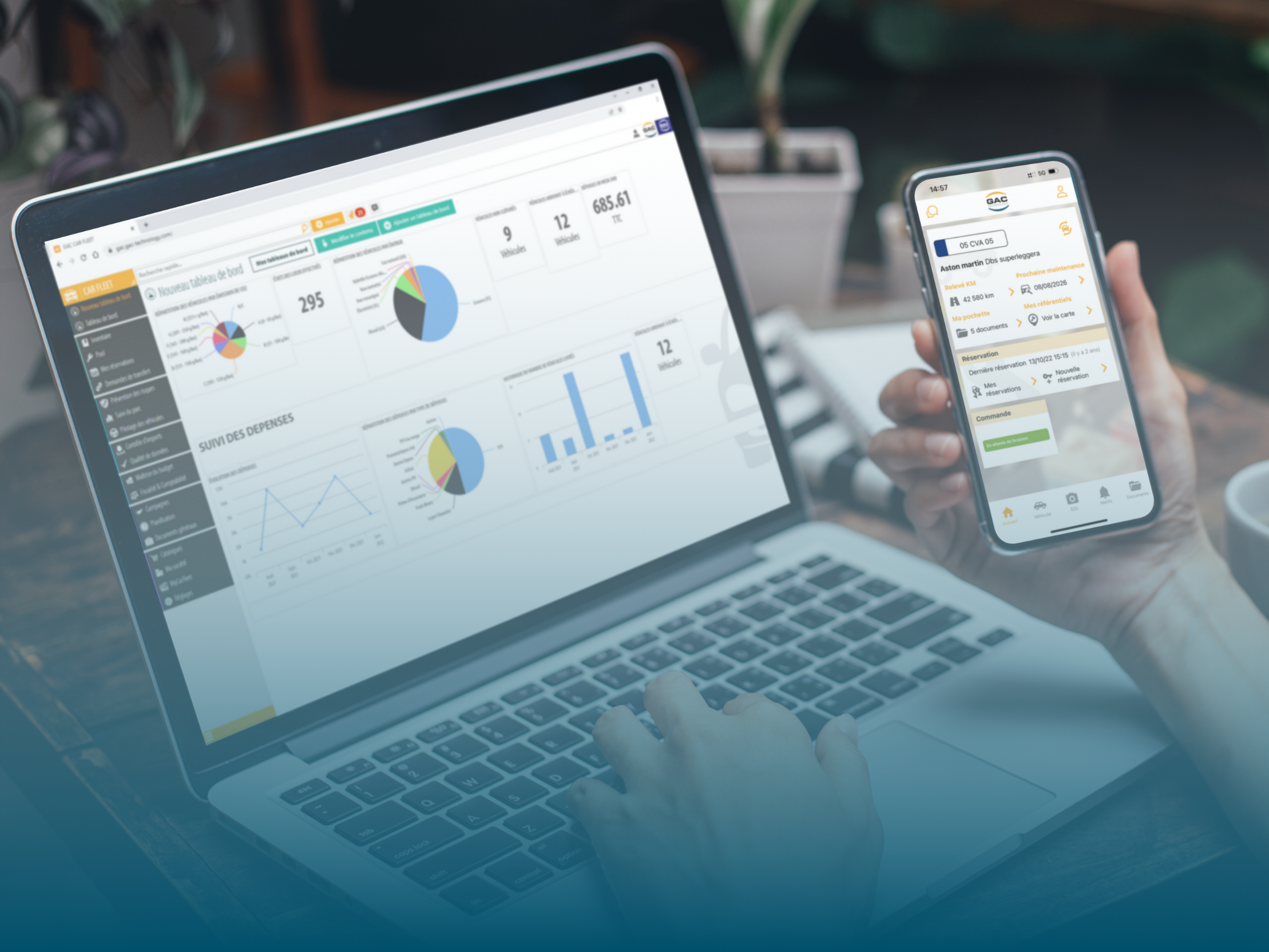
Fleet management software is a software tool designed to help companies manage their vehicle fleets efficiently. It is generally a centralized software solution that enables fleet managers to monitor and control various aspects of their vehicle fleets.
In fact, fleet management software is the essential tool for tracking each and every vehicle in your fleet throughout its life cycle within the company, from integration to return or sale.
Equipped with a wide range of functions for comprehensive fleet management, the main and most common features include :
Vehicle management: vehicle orders and inventory, dedicated vehicle identity sheet with key information needed for proper tracking (registration, make, model, year, technical characteristics, assignments, events on the vehicle, etc.)
Maintenance: tracking and reporting of expenses, programming alerts for regular maintenance and important vehicle appointments to minimize breakdowns and optimize vehicle life.
Infractions: dedicated module connected toANTAI for automated processing of infractions and designation of employees who have committed the infraction. The software also enables efficient and predictable tracking of fines and FPS (Forfaits Post Stationnement).
Driver management: efficient tracking thanks to the employee file, which includes all important information about the employee (contact details, location, vehicle assigned, driver’s license validity, etc.).
Cost optimization: tracking of vehicle-related expenses, such as leases, fuel costs, maintenance costs, insurance, fines, etc. This enables precise tracking and analysis of fleet expenditure, with a view to implementing the action plan needed to achieve cost reductions.
Reporting and analysis: generation of detailed reports on fleet performance, costs, fuel consumption, driving data, incidents and more. These reports help assess fleet efficiency and identify areas for improvement.
Document management: electronic storage and management of important fleet-related documents, such as rental contracts, insurance policies, maintenance documents, invoices, vehicle registration documents, etc.
In short, fleet management software is designed to simplify the fleet manager’s day-to-day work by enabling him or her to cover all the tasks involved in managing vehicles, improve business efficiency, achieve cost reduction targets and ensure regulatory compliance. Want to find out more? Find out why fleet management software is essential!
GAC Car Fleet – fleet management software
Manage your fleet efficiently, from order to return.